Puberphonia · The voice questions you couldn’t explain
“Why is my voice still so high?”
“Why do I sound like a girl when I’m an adult man?”
“Why does every other guy’s voice seem deeper than mine?”
“My son is 25. Why hasn’t his voice broken?”
There is a real voice condition called puberphonia. Also known as mutational falsetto, it describes a high or falsetto speaking pattern that persists after the expected voice change at puberty.
You may never have met someone with the same experience, or known there was a name to look for. This is a place to start finding answers.
I lived with puberphonia. My voice affected phone calls, conversations in noisy places and how much I wanted to speak at all. I know how personal those questions can be.
Finding my lower voice gave me another one: why could I make the sound but feel so unable to use it? I recorded the awkward, frustrating process of making it familiar.
I built this to bring the explanations, the evidence and the lived experience into one place. Start with your questions. My story is here when you want it.
Archived 5 February 2024 · Same reading passage0:46
Lower register
Read the transcript
Automatic transcript, not yet corrected. May contain misheard words and strong language. This captures what I said then, not medical advice.
When the sun strikes raindrops in the air, they act as a prism and form a rainbow. The
rainbow is a division of white light and many beautiful colours. These take the shape of
a long round arch with its path high above and its two ends apparently beyond the
horizon. There is, according to legend, a pot of gold at one end. People look, but no
one ever finds it. When a man looks for something beyond his reach, his friends say he
is looking for the pot of gold at the end of the rainbow. Although the centuries people
have explained the rainbow in various ways, some have accepted it as a miracle without
physical explanation. To the Hebrews it was a token that there would be no more
universal floods.
Archived 5 February 2024 · Same reading passage0:49
Habitual falsetto
Read the transcript
Automatic transcript, not yet corrected. May contain misheard words and strong language. This captures what I said then, not medical advice.
When the sunlight strikes raindrops in the air, they act as a prism and form a rainbow.
The rainbow is a division of white light into many beautiful colours. These take the
shape of a long round arch with its path high above and its two ends apparently beyond
the horizon. There is, according to legend, a boiling pot of gold at one end. People
look but no one ever finds it. When a man looks for something beyond his reach, his
friends say he is looking for the pot of gold at the end of the rainbow. Throughout the
centuries, people have explained the rainbow in various ways. Some have accepted it as a
miracle without physical explanation. To the Hebrews, it was a token that there would be
no more universal floods.
Original audio, compressed for listening with no pitch effects. A personal comparison, not a diagnostic test.
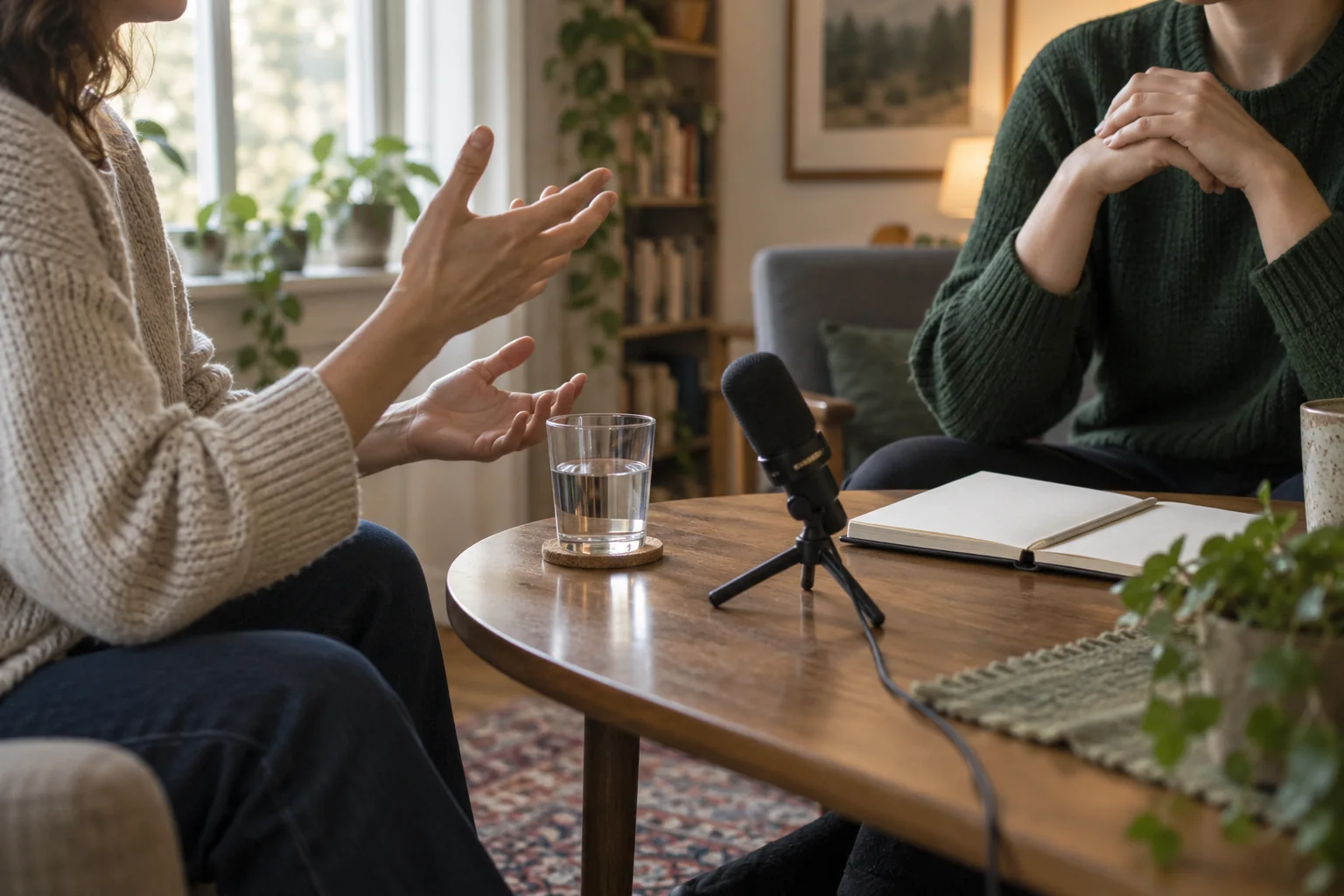
A coffee. A conversation.
Being heard in a noisy café shouldn’t have required this much thought.
A lot of talking to myself.
Sometimes I had a point. Sometimes I needed to hear myself work it out.
AI-created scenes inspired by the diary · Leemus’s likeness based on his 2024 recording
Ordinary life was the point.
A little about me
I wanted to be heard. Then get on with my day.
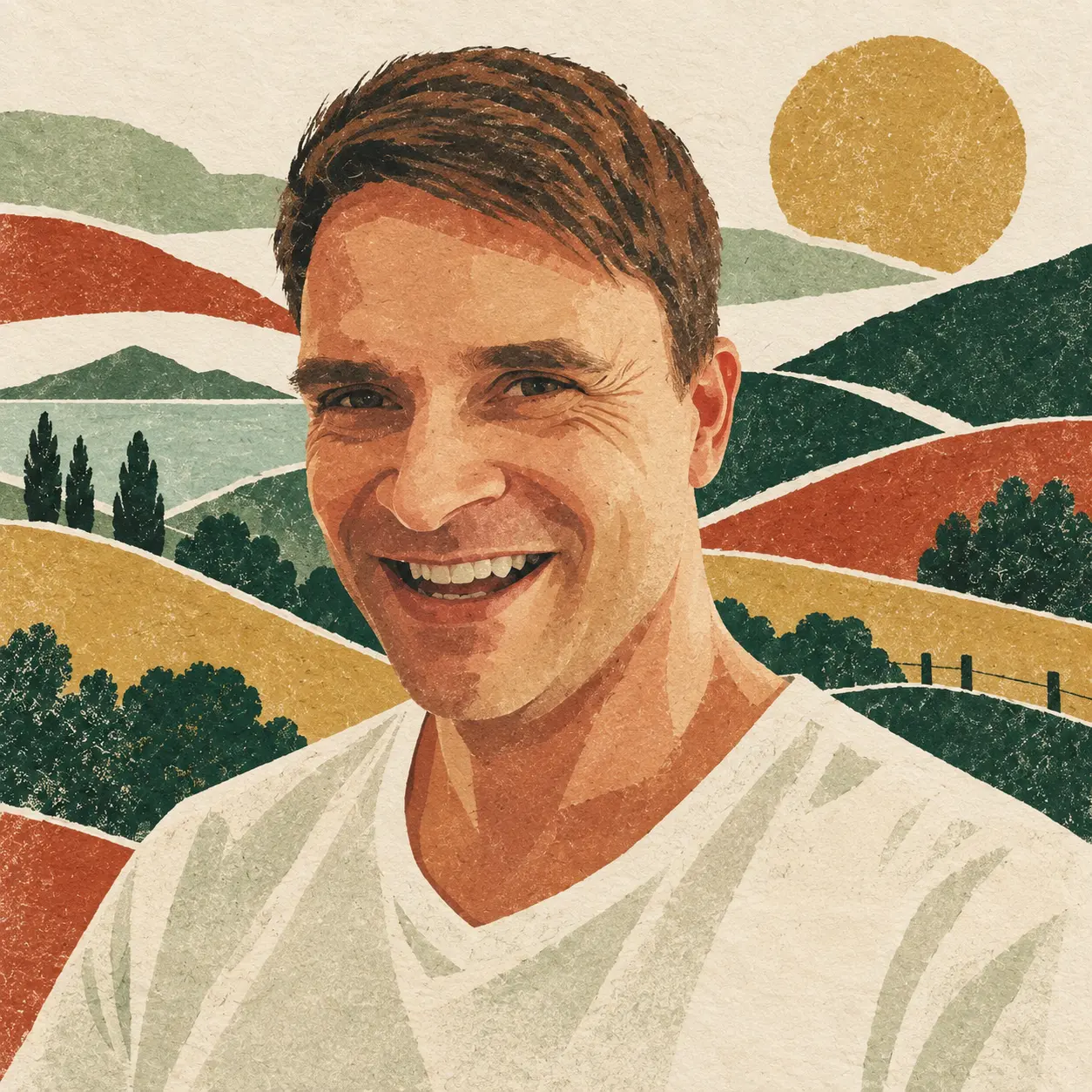
I’m from New Zealand. I like being able to have a conversation at the gym or be heard over a motocross engine. For years, my voice made things like that harder than they needed to be.
I’ve thought about my voice enough for several lifetimes. The point of changing it was to spend less of my life doing that.
The recordings tell you what happened to me. The research helps explain the condition and its treatment. I’ve kept the sources and their limits visible so you can judge both.
Clinical evidence
Research and professional guidance, with the limits beside the findings.
My experience
My recordings and memoir. What happened to me, as honestly as I can tell it.
Community experience
Other people’s accounts, clearly identified as anecdotal.
Still uncertain
Questions we don’t yet have enough evidence to settle.
I have questions about why changing my voice felt so uncomfortable. My ideas about identity and past experiences are personal hypotheses, not a confirmed cause of my condition.
You can start by describing what your voice does, what hurts or feels difficult and where it gets in the way. This guide explains who can help and what to ask.